

Blūm Systems has demonstrated reproductive development and fruit production across multiple perennial crop categories—including citrus, avocados, grapes, and numerous specialty crops—supporting continued evaluation of Blūm as a multi-crop production and research platform.
Greenhouse Trials:
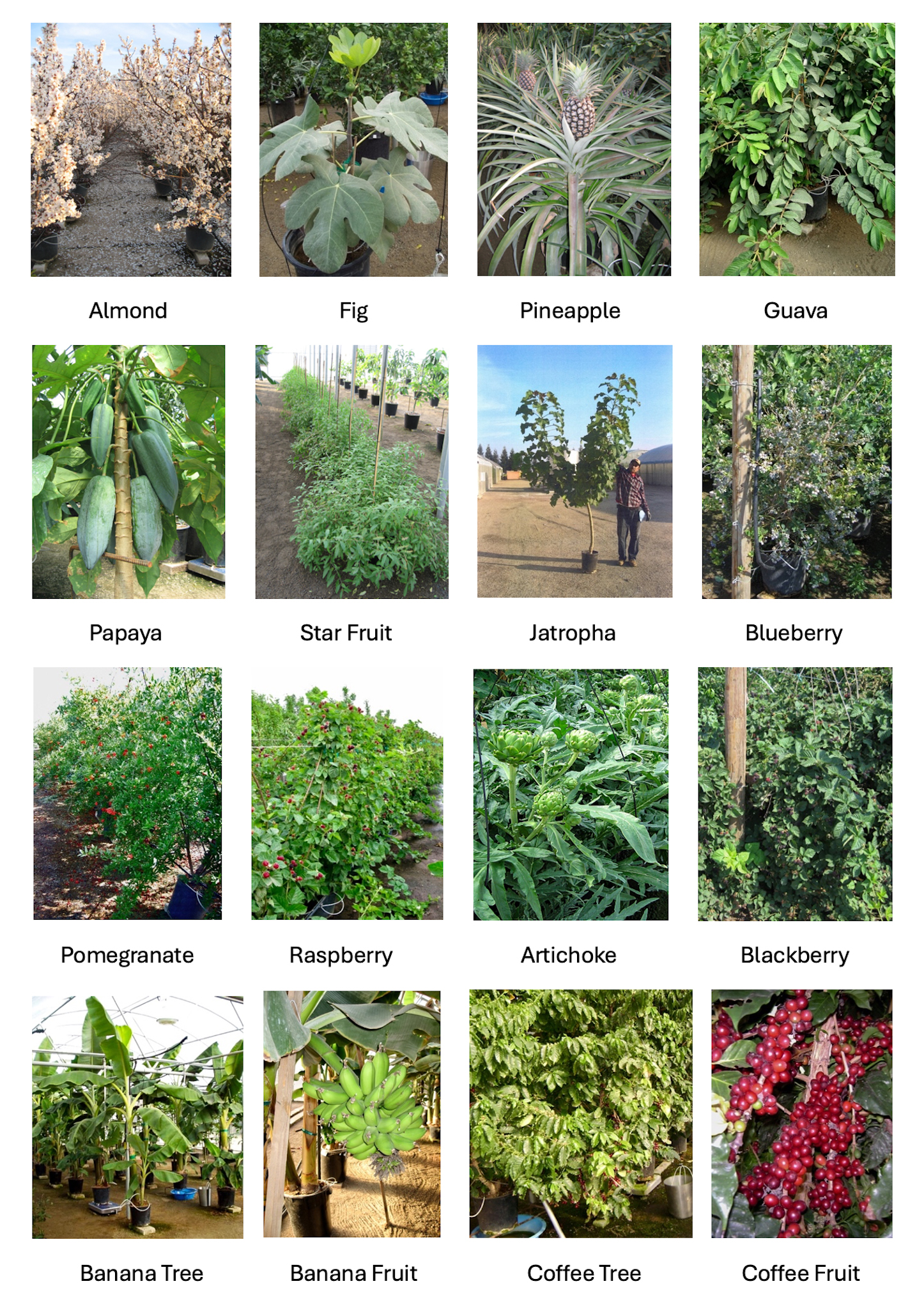
avocado • banana • pineapple • coffee • guava • papaya • artichoke • dragon fruit • starfruit
Shade House Trials:
citrus • avocado • mango • wine grapes
Open Field Trials:
citrus • avocado • table grape • wine grape • almond • cherry • olive • pomegranate • blueberry • raspberry • blackberry • fig • jatropha
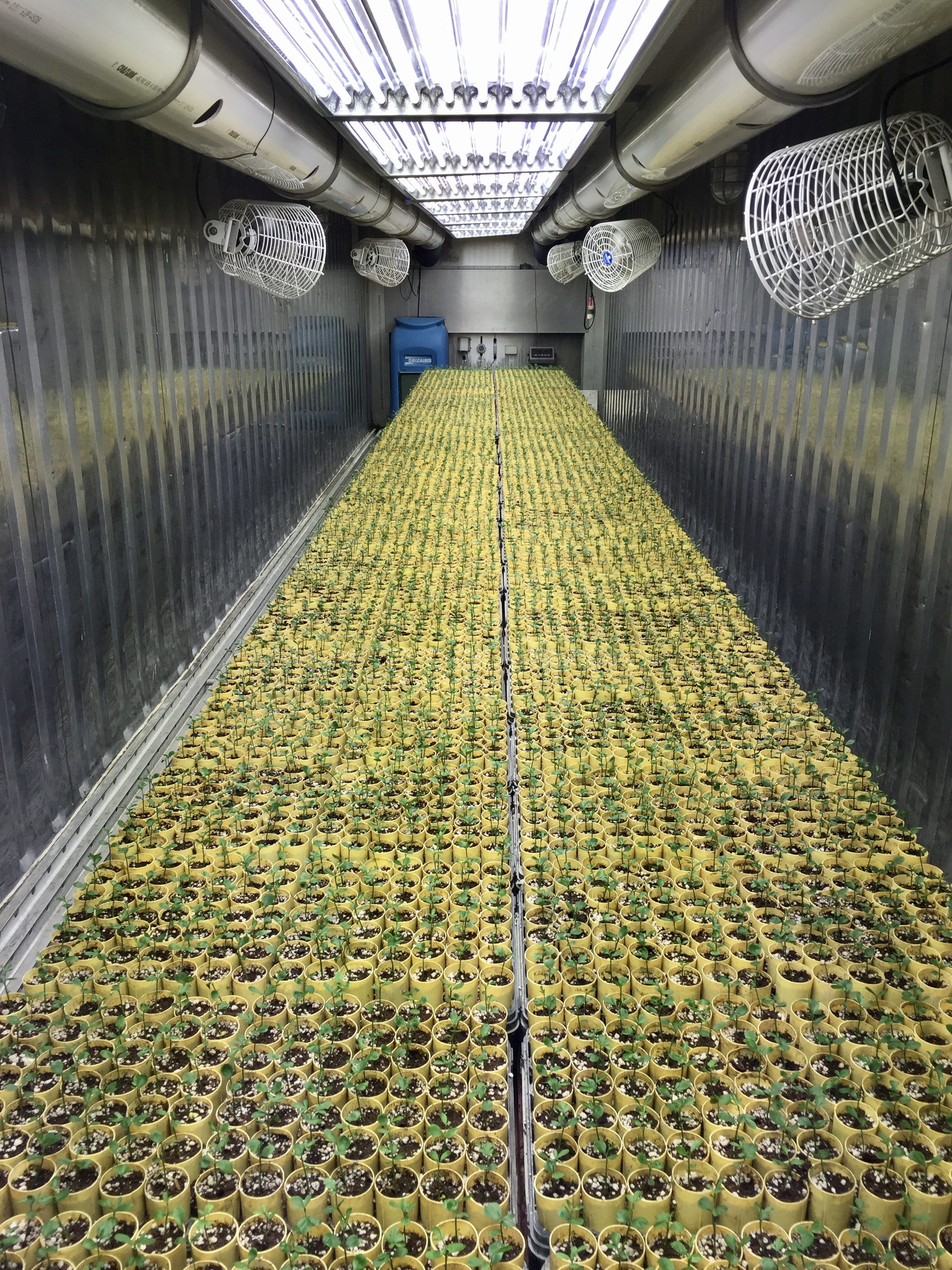
Blūm was originally developed to address one of the most significant constraints in perennial crop development: time.
Early work focused on accelerating the evaluation of seedless cherry and seedless mandarin breeding programs, where long juvenile periods and delayed fruiting can slow meaningful commercial evaluation.
The objective was simple: shorten the timeline between genetic development and meaningful commercial insight.
Over time, Blūm evolved into a precision-controlled production platform designed to investigate earlier flowering, fruiting, and evaluation across multiple perennial crop categories.
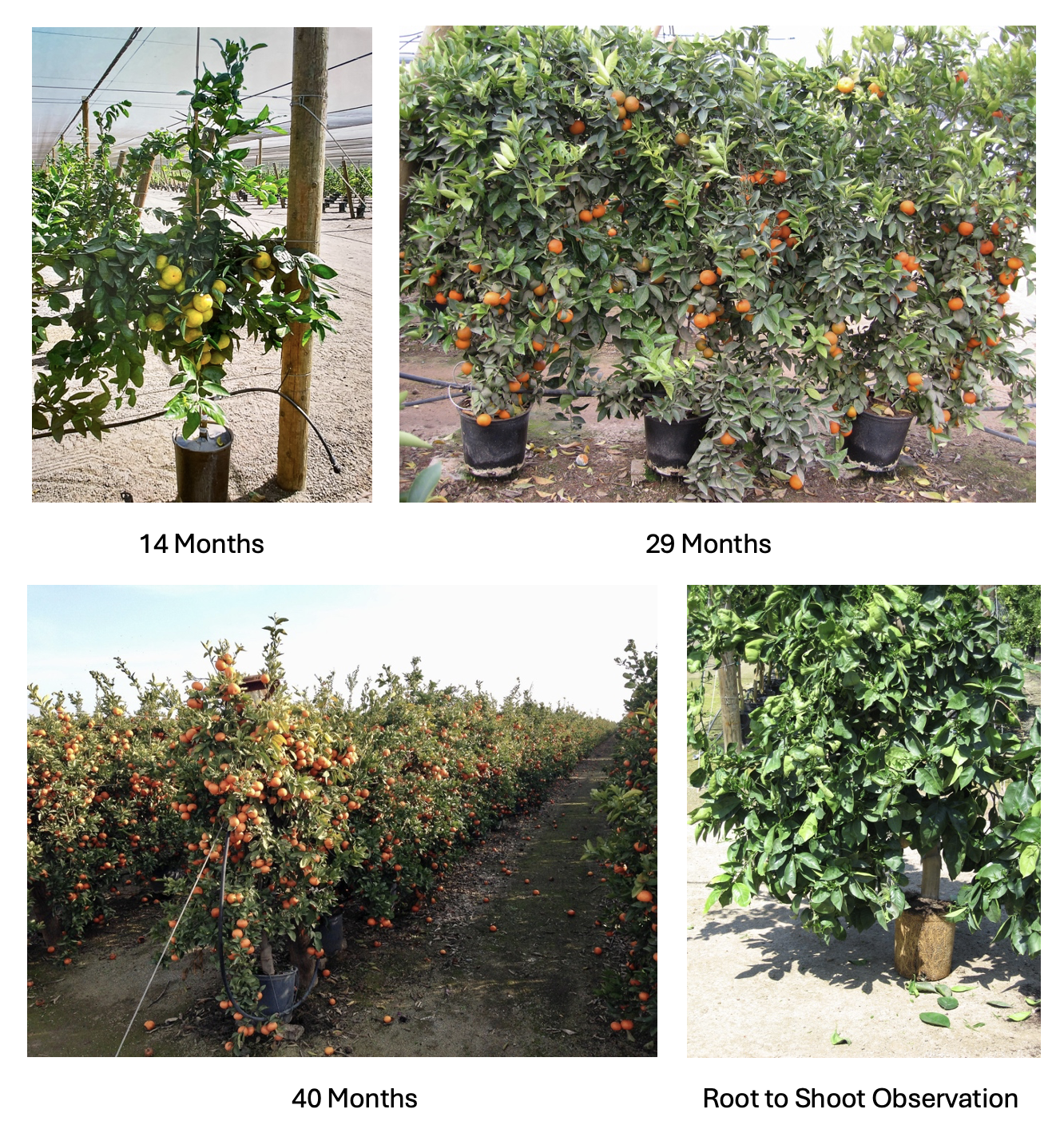
Citrus selections within the Blūm system exhibited earlier reproductive expression, reduced thorn expression, increased flowering, and earlier fruit production. These observations contributed to the hypothesis that precision-controlled root-zone management may influence the transition from juvenile growth to reproductive maturity.
Photographs illustrate citrus development and fruit production at approximately 14, 29, and 40 months, together with example of root-to-shoot relationship observed within the system.
A 46-acre Blūm plot of seedless mandarins was developed in California's Central Valley within a 160-acre farm with nearly 80,000 trees. The first commercial crop was harvested within 18 months after planting with production exceeding 12,000 pounds per acre.

Avocado selections exhibited reproductive development, flowering, and fruit production earlier than would typically be expected during conventional orchard establishment. These observations suggest that precision-controlled root-zone management may provide opportunities to evaluate commercially relevant traits earlier in long-cycle perennial crops.
Photographs document progression from planting through reproductive development and fruit production at approximately 4, 12, 15, and 17 months. Planting date: June 2022.
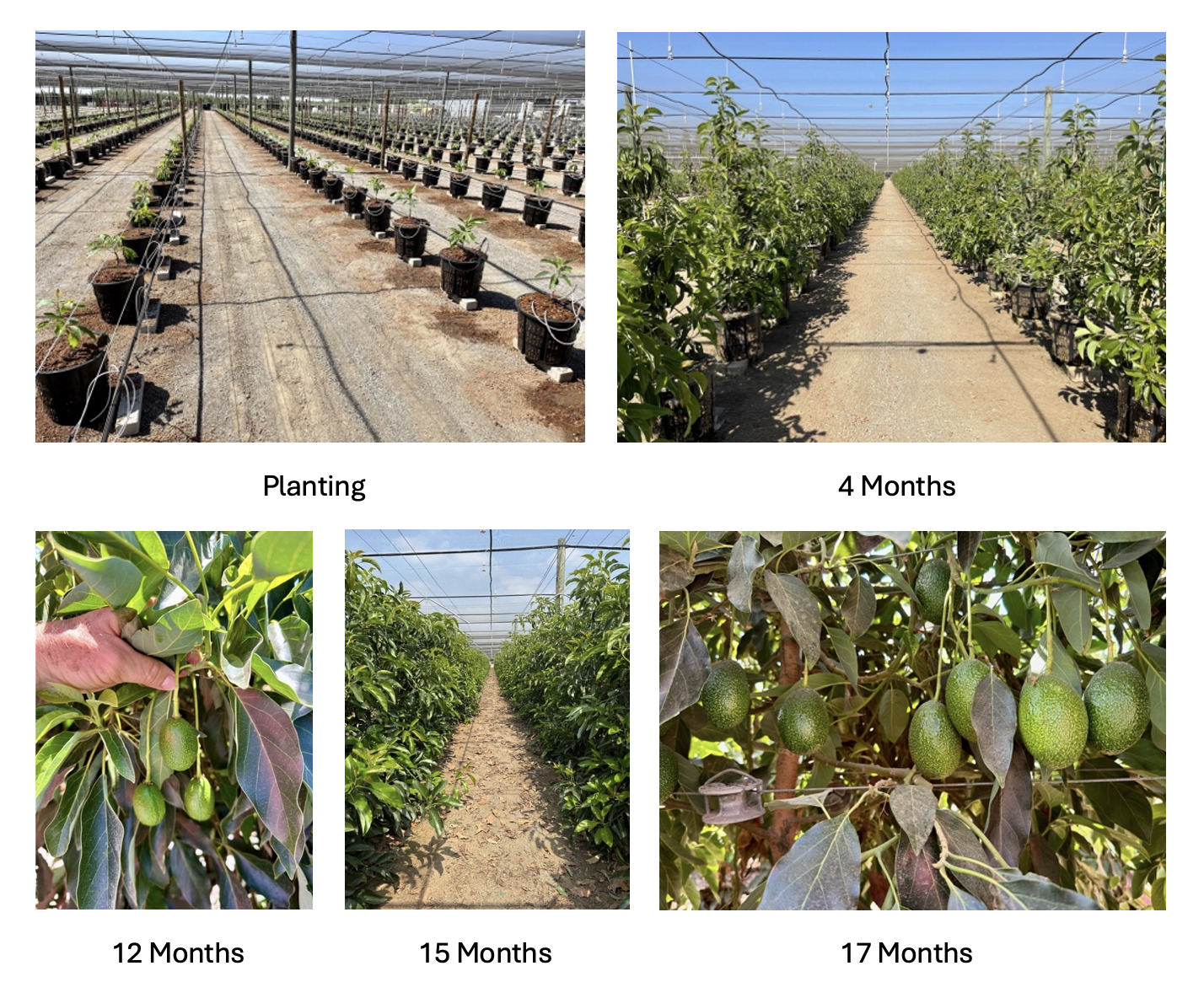
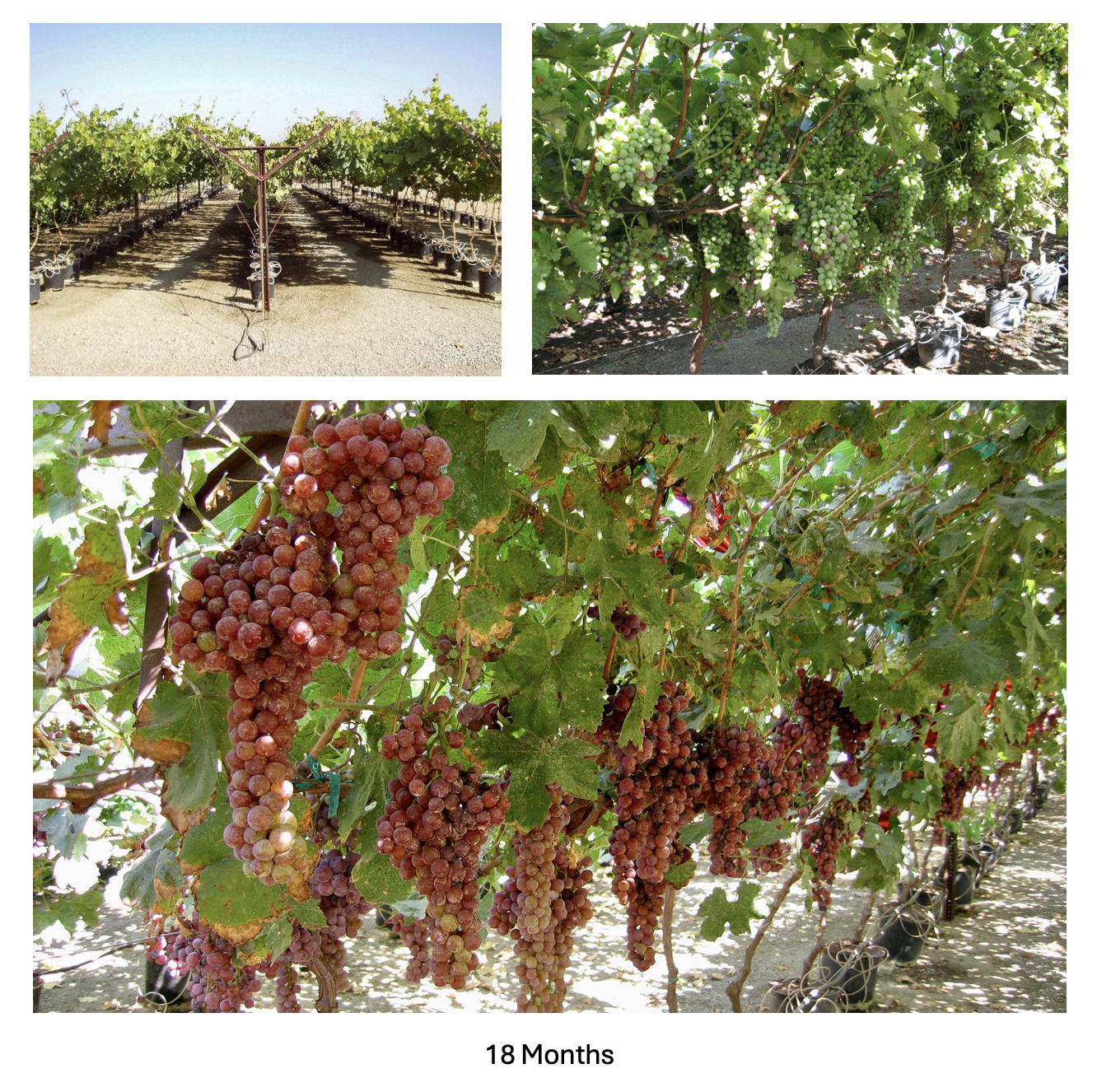
Table grape selections exhibited earlier reproductive expression, flowering, and fruit development that would typically be expected during conventional vineyard establishment. Collectively, these observations suggest that precision-controlled root-zone management may accelerate the evaluation of commercially relevant traits in perennial fruit crops.
Photographs below illustrate fruit production and crop development observed approximately 18 months after planting. Planting date: June 2016.
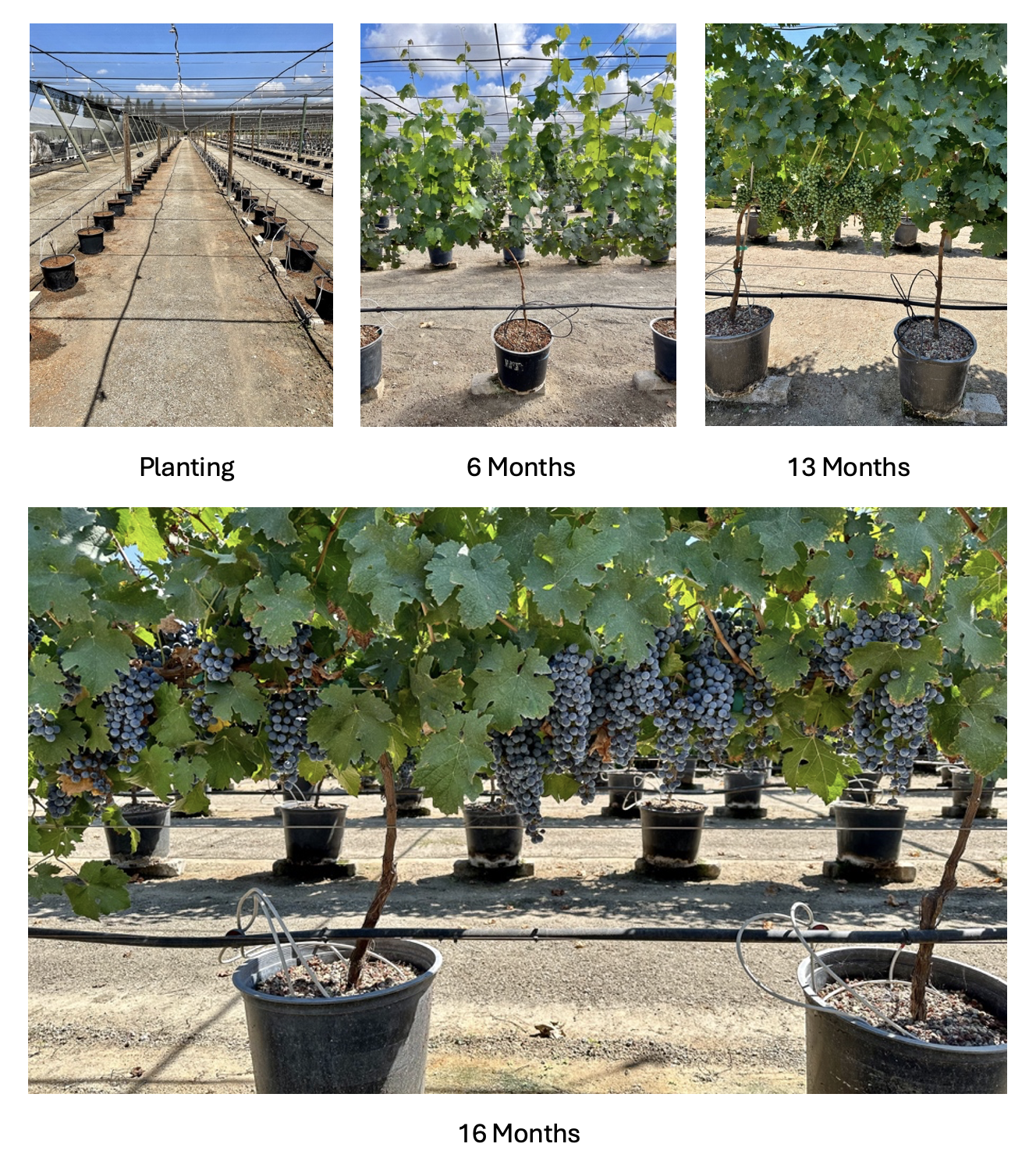
Wine grape selections exhibited earlier reproductive expression, flowering, cluster development, and fruit production than would typically be expected during conventional vineyard establishment. Collectively, these observations suggest that precision-controlled root-zone management may accelerate the evaluation of commercially relevant traits in perennial fruit crops.
Photographs below document progression from planting through reproductive development and fruit production at approximately 6, 13, and 16 months. Planting date: May 2022.
• Earlier reproductive expression
• Accelerated fruiting
• Earlier commercial evaluation
• Repeatable controlled production
• Increased flowering intensity
• Reduced juvenility
• Reduced thorn expression in citrus
• Earlier fruit quality evaluation
Perennial agriculture is constrained by time. Years can pass between planting, reproductive maturity, fruit evaluation, and commercial decision-making.
Blūm is being developed to investigate whether greater control of the root-zone environment can compress portions of that cycle—creating opportunities for faster genetic evaluation, earlier commercial insight, and more measurable perennial crop production.
Blūm’s controlled irrigation and fertigation architecture provides visibility into resource delivery and production conditions throughout the growing environment.
Water Consumption
Precise measurement
Nutrient Delivery
Recorded fertigation inputs
Irrigation Frequency
Continuous monitoring
Leachate
Volume and recovery tracking
Environmental Response
Weather-based adjustments
Historical Records
Irrigation, nutrition & system performance
This creates a measurable framework for correlating plant performance with water, nutrition, environmental conditions, and management practices.
Blūm Systems continues to develop the platform across perennial crop production, research, evaluation, and commercial applications.
UNDERSTAND THE SYSTEM